I grew up believing that if you worked hard and made thoughtful choices, you’d have a fair chance to succeed.
My mother was a kindergarten teacher who used to tell us we could do anything—we just had to make a plan, and be willing to adapt it as we tried to carry it out. That early message shaped how I think about choices, effort, and asking questions—especially when it comes to money.
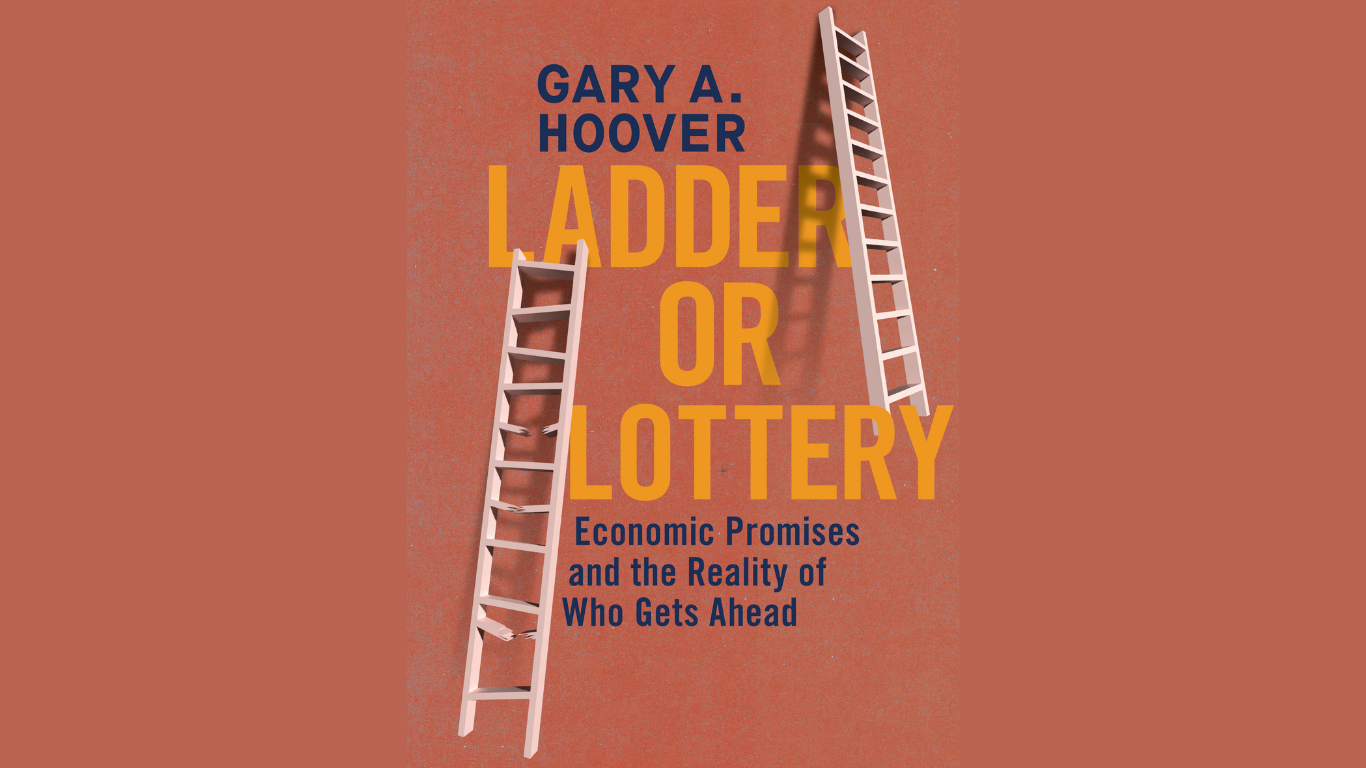
Reading Dr. Gary Hoover’s "Ladder or Lottery" helped me reflect on what happens when that belief is no longer reliably experienced.
The book asks two deceptively simple questions:
- Does success in our world feel more like climbing a ladder—or winning the lottery?
- And if it feels too much like chance, how do we fix that?
The Social Contract - In Simple Words
Dr. Hoover begins by defining the haves and have-nots and revisiting the idea of the social contract—the belief that if you work hard and make good choices, society should give you a fair chance to succeed. Many of us grew up believing that. Some of us were lucky enough to live it. But many young people today feel the ladder is missing rungs—or that success is a lottery other people win.
In my reading, Dr. Hoover’s central concern is how damaging that perception can be—and what we might do about it. Certainly, some answers can be found in listening carefully to fellow citizens—and in ensuring that today’s school-aged children acquire practical life skills early. Skills like learning how to measure trade-offs when making post-secondary plans. It is so much easier to avoid a pitfall than to dig out of one later.
Who This Book Is For
This book will speak to teachers.
If you work with children, believe they deserve a fair shot in life, and think we are all better off when most citizens can meet their needs (and a few wants), this book is worth your time. Its central message is clear: if we want young people to believe in the future, we have to teach them—early—how pausing, gathering information, and reflecting help shape that future.
Anyone who has ever stood on the top rung of a ladder knows they did not get there by chance. Our task is to ensure that school-aged children not only know how to climb, but also see each rung as the necessary foundation for the next.
It will also speak to parents.
This book doesn’t blame. It doesn’t divide. It encourages—and reveals specific steps parents can take today:
- Talk about goals—even if they change later.
- When given an opening, talk about money.
- Ask your children: “What could you do now that might help your future self?”
Prepare answers to questions children may one day ask, such as:
- Who can I ask for help if I don’t understand something?
- Why might someone ask a lot of questions before signing something important?
- When is it a good time to ask an expert for help?
Hope isn’t abstract; it’s built.
The earlier kids feel successful at solving real-life problems, the more willing they become to tackle challenges. That confidence matters. It enables young people to comfortably ask clarifying questions—the ones that move us beyond basic understanding and toward real insight.
Confidence also allows kids to try new things. This helps them understand that their choices matter, that they have agency, and that almost everything worthwhile takes time.
Starting to understand why I am so passionate about mindful-spending lessons for middle-school students?
While I have focused here on how Dr. Hoover lays the groundwork for renewing belief in the social contract, the book does more than that. In Chapters 4–6, for example, it draws an impressive through-line across major social movements of the last decade, illustrating how people around the world respond when opportunity feels unpredictable.
Unsurprisingly, I see a clear connection between Dr. Hoover’s work and ours at the Gifting Sense Project: creating circumstances in which young people can practice making real consumer decisions—while feeling fully permitted to ask every question they need to feel confident. Especially when money habits and beliefs are still forming.
"Ladder or Lottery" is not a casual read—but it is a rewarding one. It asks us to engage with ideas that have real consequences for how opportunity is experienced and understood. The care with which Dr. Hoover builds his argument is precisely what gives the book its force.
Here’s to early financial education—and to renewing belief in a social contract where effort can consistently lead somewhere. At the start of a new year, this is the kind of reading I’m glad I made time for. You might too.
To learn more about our permissionless mindful spending tools, click on the pink or blue buttons below.
Child Development Financial Literacy For Parents For Teachers Inspiring Financial Writers